Padre Pio’s Ministry
Padre Pio always celebrated Mass in the very early morning, often at the break of dawn or even earlier.
He frequently used the side altar dedicated to the Immaculate Conception, though he would also celebrate at the central altar or, later, at the altar of Saint Francis. After his thanksgiving prayers, he would begin hearing confessions—first for the men in the sacristy and then for the women in the small church.
When all the confessions were complete, Padre Pio would return to the sacristy, put on his surplice and stole, and reenter the church to distribute Holy Communion to the faithful.
It was not uncommon for Communion to be distributed late in the morning. At the time, Church law required a complete fast from midnight, including even water, making this no small sacrifice for the faithful. In the afternoon, after a brief rest, Padre Pio would return to the sacristy to hear confessions from the men.
There were periods when the number of penitents was enough to keep him occupied all day; at other times, the crowds were smaller. Regardless, everything—confessions and any additional meetings with Padre Pio—was typically completed within the day.
Meanwhile, modest houses gradually began to appear near the friary. Some were built by pilgrims from other regions who wished to settle permanently or establish a base for their regular visits. Others were built by local families eager to move closer to the friary where Padre Pio lived.
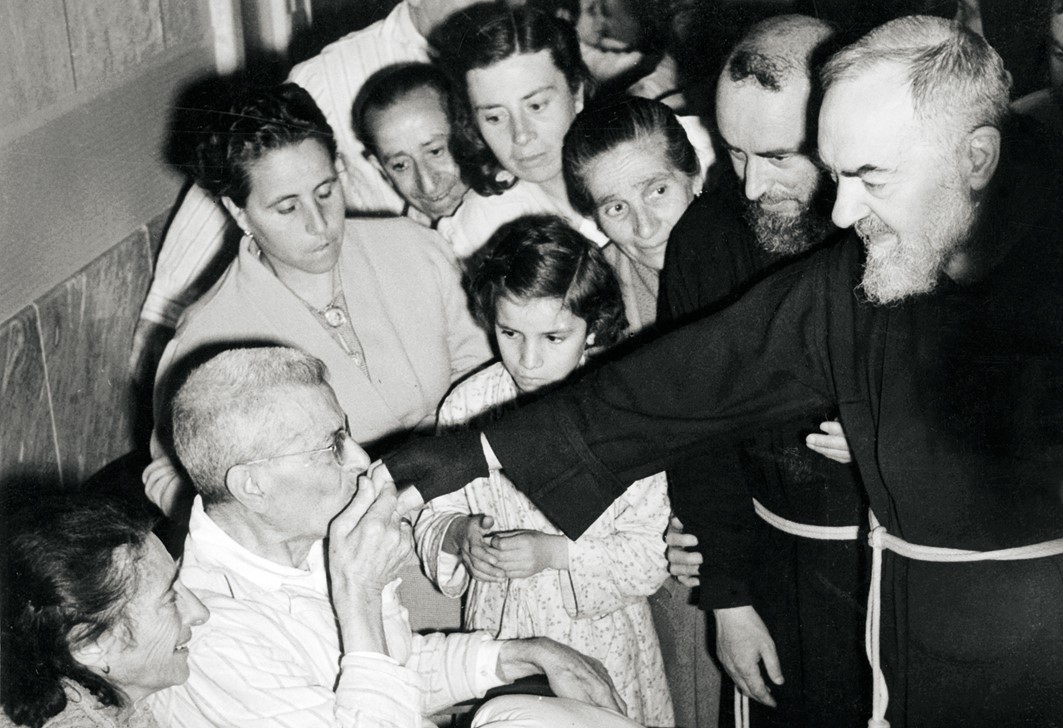
By this time, Padre Pio had become the center of a spiritual family that continued to grow and expand. He guided this family not only in matters of faith but also with practical advice, offering counsel to the local people who frequently sought him out in the confessional and during personal meetings, as well as to many others who came from far away.
All who turned to him held him in profound veneration. While they saw him as someone close, almost like a member of their own family, and approached him with trust and familiarity, they also recognized in him a divine, supernatural seal.
Some entrusted themselves to him entirely, following his spiritual direction with unwavering devotion. They absorbed and meditated on his teachings, shared in confession or through brief written messages, which supplemented the many deeply spiritual letters he wrote for as long as he was able.